
Quality that makes a difference!
FAQ – General questions
Here you will find answers to general questions relating to Röltgen itself and the general conditions. If you cannot find a suitable question or answer, we will be happy to assist you personally.

Is there a field service in my area?
If you have a labelling problem and/or would like a demonstration, we are happy to help. Our field service consists of three employees:
Mr Jörn Dorfmüller is responsible for postcode areas 34, 35, 36, 37, 40, 41, 42, 45, 46, 47, 50, 51, 52, 53, 54, 55, 56, 57, 58 and 65.
You can reach him by telephone on +49-173-3991971 or by email at j.dorfmueller@roeltgen.de.
Mr Andreas Bussmann is responsible for the postcode areas 16, 17, 18, 19, 20, 21, 22, 23, 24, 25, 26, 27, 28, 29, 30, 31, 32, 33, 44, 48, 49 and 59.
You can reach him by telephone on +49-173-3991974 or by email at a.bussmann@roeltgen.de.
Mr Thomas Weller and Ms Yasmina Weller are our sales representatives in the postcode areas 34500-34639 / 35 / 36 / 54 / 55 / 56000-56869 / 60 / 61 / 63 / 64 / 65 / 66 / 67 / 68 / 69 / 74 / 75 / 76.
You can reach them by telephone on +49-172-6302182 or by email at thoweller@web.de.
Mr Andre van den Busche is responsible for the postcode areas 70 / 71 / 72 / 73 / 77 / 78 / 79 / 80 / 81 / 82 / 86 / 87 / 88 / 89.
You can reach him by telephone on +49-160-94873839 or in writing at a.busche@freenet.de.
Mr Marc Baehr is responsible for all other postcode areas.
You can reach him in writing at m.baehr@roeltgen.de.
What distinguishes Röltgen from other market competitors?
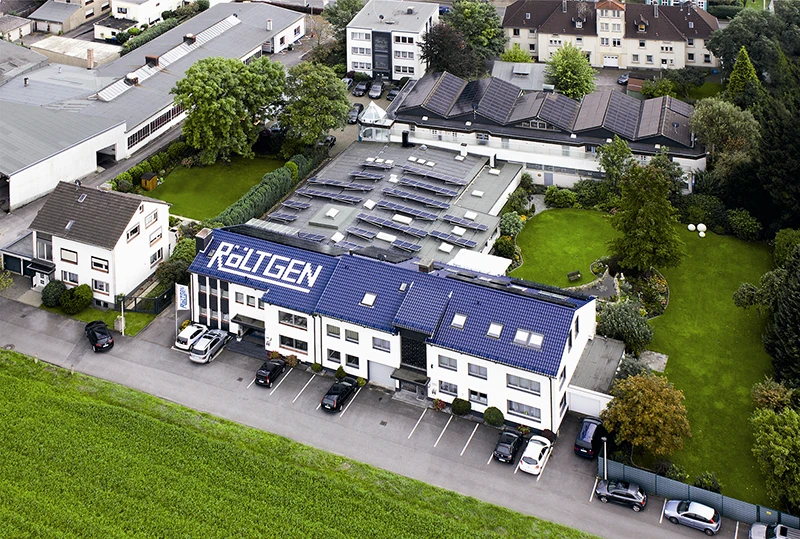
For over 85 years, Röltgen has stood for quality, precision and durability in industrial marking. As a family-run company, we develop and manufacture marking tools, marking machines, tablet presses and format parts in Germany, ensuring that our products meet the highest quality standards. We deliberately rely on our own trained specialists, because experience and craftsmanship form the basis for reliable solutions.
For over 85 years, Röltgen has stood for quality, precision and durability in industrial marking. As a family-run company, we develop and manufacture marking tools, marking machines, tablet presses and format parts in Germany, ensuring that our products meet the highest quality standards. We deliberately rely on our own trained specialists, because experience and craftsmanship form the basis for reliable solutions.
At Röltgen, we don’t just work together, we see ourselves as a community. Respectful cooperation, a friendly working atmosphere and a good work-life balance are important to us in order to maintain motivation and commitment in the long term.
Our innovative strength drives the market forward because we work closely with universities and research institutions. This results in solutions with real added value. Examples include the FlexiTab tablet press, the first dot marking machine in Germany, and hologram embossing on metal as a security feature. Such developments give our customers a technological edge.
Röltgen GmbH & Co. KG stands for quality, innovation and partnership-based service. Together, we develop solutions that make your processes safe and efficient.
Können Maschinen individuell angepasst werden?
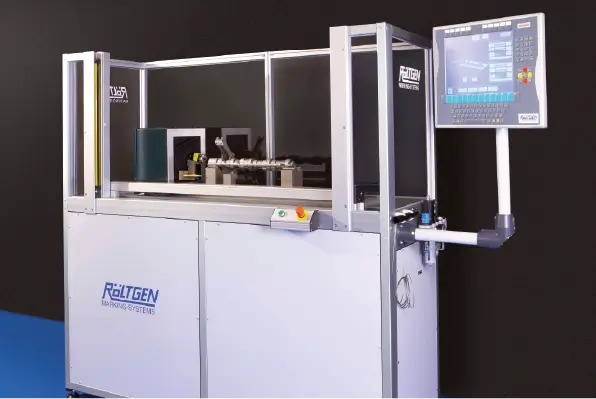
Yes, because many applications have special requirements. That is why we customise machines, holders and tools individually.
You can find information about our special machine construction here.
In which professions does Röltgen provide training?
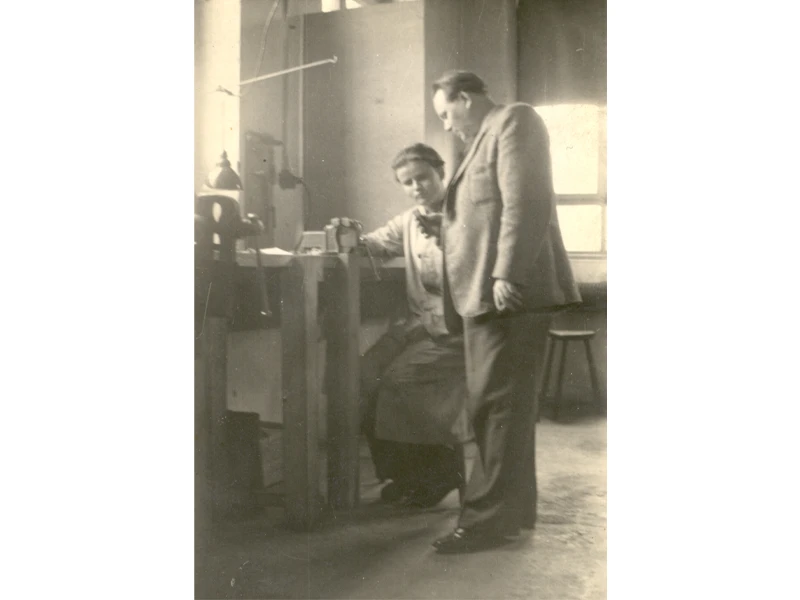
Röltgen has been providing training for more than 50 years. This is very important to us because it allows us to give something back to society.
We train young people to become machinists specialising in milling, turning and grinding. We also train steel engravers and industrial clerks. Many of our trainees stay with Röltgen after completing their training.
Whether you are female, male or diverse – apply to us. Simply send your application documents to m.baehr@roeltgen.de.
What marking methods does Röltgen offer?
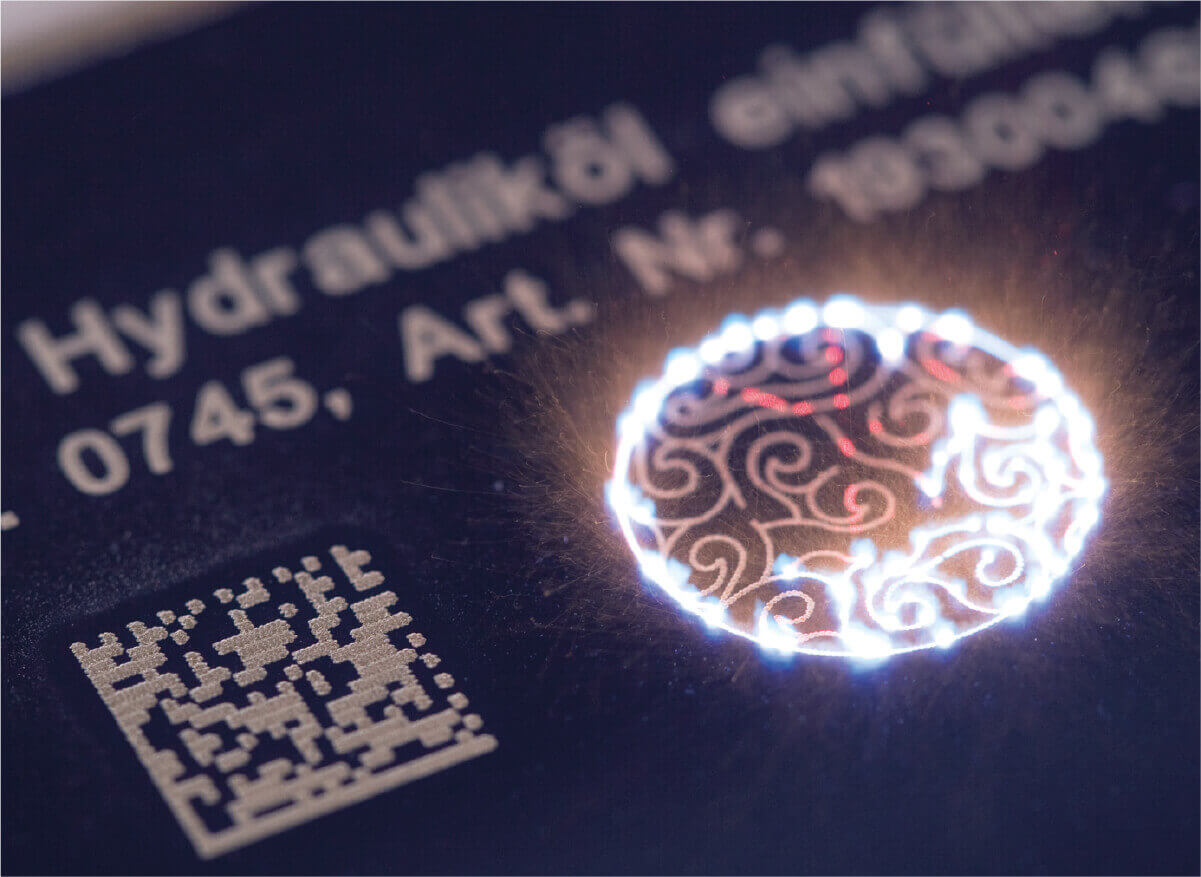
Röltgen offers various solutions for permanently and uniquely marking products and packaging. The aim is to apply important information such as serial numbers, technical data, test marks or traceability codes securely and legibly – both on components and along modern production and supply chains.
In the field of mechanical marking, processes such as dot peen embossing, scribe marking and embossing are used. They create permanent markings directly in the material and are particularly suitable for industrial components and type plates. In addition, laser marking enables contactless, high-contrast labelling with a high level of detail, ideal for logos, fine fonts and machine-readable codes.
For applications where information is attached separately, Röltgen offers nameplate solutions that are embossed or laser-marked and display all relevant product data in a durable manner.
In addition, the portfolio includes coding tools for packaging, which can be used to quickly and reliably apply batch markings, data or identification codes to cartons, labels or packaging materials.
In short, Röltgen combines mechanical marking, laser marking, type plates and packaging coding to make products uniquely identifiable throughout the entire production and logistics process.
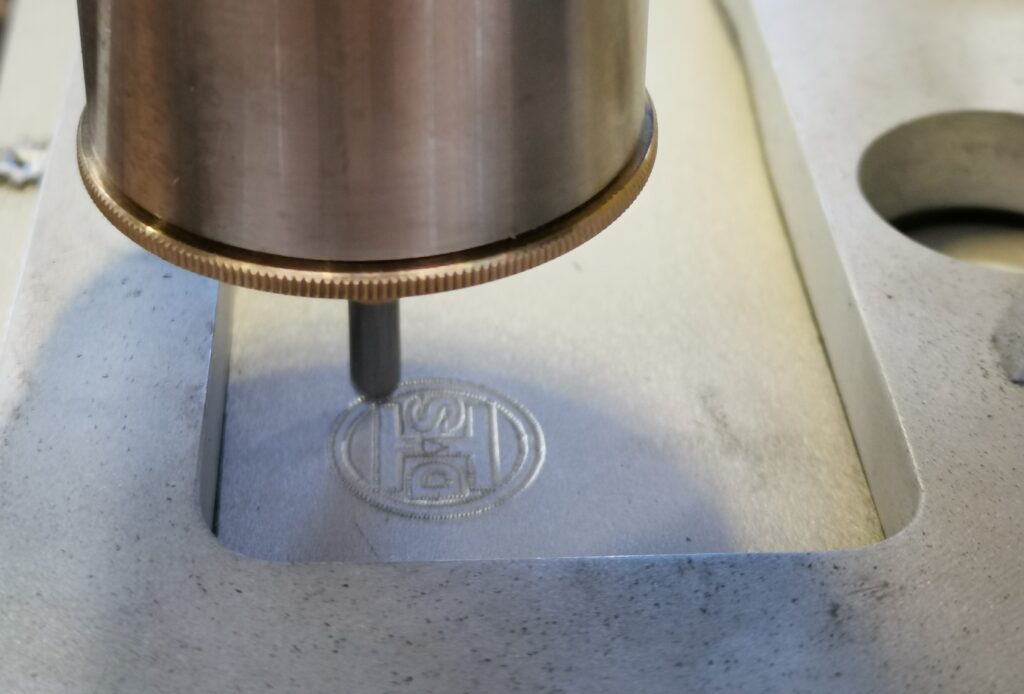
Does Röltgen also offer wage labelling?
Yes, if it does not make sense for you to have your own machine, we will take care of the labelling for you. This saves you investment and time. You can find more information here.

How did embossing technology come about?
Embossing is one of the oldest methods of making information permanently visible. Even in ancient times, people used stamps and seals to mint coins, authenticate documents or mark property. A shaped tool was pressed into a soft material to create an impression. With industrialisation, this principle developed further: instead of pressing into wax or soft metals, increasingly harder materials were embossed to create permanent markings.
The basic principle has remained the same to this day. An embossing stamp bears letters, numbers or symbols in raised form. When pressed forcefully into a material, the surface is permanently deformed and the information remains visible as a depression or raised structure. This type of marking is particularly durable because it is not applied to the surface but is embossed directly into the material.
With the advent of modern industry and mass production, embossing technology became an important part of product marking. Machine parts, pressure vessels, vehicle components and metal plates are embossed to permanently affix manufacturer data, serial numbers, test marks or safety-related information. In many areas, this is even mandatory because the marking must remain legible even under heat, dirt, corrosion or mechanical stress.
Today, embossing technology is used both manually with hand stamps and automatically with embossing presses. It offers tamper-proof, durable and standard-compliant marking and plays a central role in the traceability of products and components.
In short, embossing technology evolved from early stamping and sealing processes and developed into an industrial method for permanently embossing information into materials – robust, durable and indispensable for modern product marking.
If your question is not answered in this FAQ, please contact us directly. This will ensure you receive a prompt, personalised response.